If your dog scratches but has no fleas , tra le cause più frequenti ce ne sono cinque: le pulci stesse anche quando non si vedono, altri parassiti invisibili a occhio nudo, un’infezione della pelle, gli allergeni dell’ambiente e una reazione al cibo. Distinguishing them is not done by eye: it is done with the vet, starting from what you have observed.
Hai spazzolato il pelo controllando bene. Hai rispettato il calendario dell’antiparassitario. E lui continua.
It's not your fault if you can't figure it out.
If your dog scratches but has no fleas, the first thing to know is that Itching is not a diagnosis: it's a sign, and under the same signal there are very different things.
E c’è una cosa da mettere in conto subito: you can't tell the cause by where you scratch it.
Different skin diseases look very similar, and the signs overlap.

1. Fleas, yes, even when you don't see them
It seems like a contradiction, but it is one of the first things the vet checks.
In flea allergy dermatitis the problem is not how many There are fleas: it's the reaction to their saliva.
In un cane allergico può bastare un’esposizione molto piccola. Per questo not seeing them on the fur is not enough to rule them out.
L’indizio: the itching is concentrated on the lower back, alla base della coda e sull’interno cosce.
What to do: non fermarsi a “ho guardato e non ce n’erano”.
The vet will also evaluate how the dog responds to a well-made anti-parasite.
2. Other parasites, invisible to the naked eye
Fleas aren't the only ones.
The mange mites and other microscopic parasites cannot be seen without a microscope.
L’indizio: itching intense and sudden, scabs, hair loss.
What to do: fra gli esami che il veterinario può fare c’è il skin scraping. È veloce, e a occhio non c’è modo di sostituirlo.
3. Un’infezione della pelle
Bacteria and yeast can cause your dog to scratch.
They may be the cause, or they may appear as a secondary infection insieme a un altro problema della pelle: la cute si irrita a furia di essere grattata, e l’infezione trova la porta aperta.
L’indizio: skin greasy and red, flaking, scabs, hair loss, changed skin odor.
None of these signs alone tells you what it is.
What to do: qui si vede la differenza fra togliere il prurito e capirlo. Se si calma solo il sintomo, l’infezione resta.
4. L’ambiente (dermatite atopica)
Pollen, dust mites, mold, grasses.
L’indizio: all’inizio the dog scratches but the skin seems fine, the lesions appear later, due to scratching.
It mainly affects the paws, muzzle, ears, armpits and belly, and often starts at a young age.
Pay attention to one point that confuses everyone: l’atopia può essere stagionale, ma può anche durare tutto l’anno.
So “si gratta anche a gennaio” it's not enough to say it's food.
What to do: talk to your vet about it.
There is no signal that an owner can read on his own to distinguish between environment and food.
5. Food
Una reazione avversa all’alimento si vede spesso sulla pelle, e non necessariamente nella pancia.
It can be accompanied by ears that get constantly inflamed and an irregular bowel, but it is not mandatory: many dogs just have itching.
And this is where the misunderstanding almost all of us fall into lies: we change brands of kibble two or three times with no results, convinced we've changed our diet. But if the main protein source remains the same—chicken, chicken meal, poultry protein—
The variable that matters has never changed.
We changed the bag, not the contents.
What to do: leggere l’etichetta guardando le proteine, non i marchi.
And talk to your vet about it, because truly verifying it requires a specific process.
What to look for before your visit
Your job is not to get to the diagnosis.
It's about coming to the vet with the right clues.
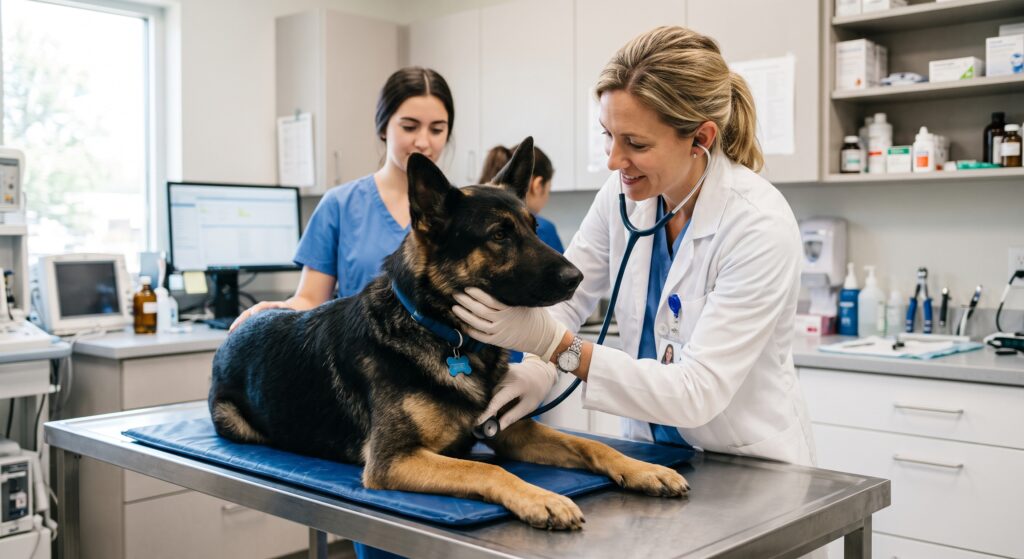
Invece che con un “si gratta da un po'”.
In the days leading up to your visit, write down:
- What month did it start in?, and if there are periods when it goes better.
- Where he scratches or licks the most: legs, ears, belly, base of tail.
- If the skin has changed: odor, grease, dandruff, scabs.
- If there are inflamed ears that come back.
- What he really eats. Not just kibble: also treats, the leftover piece of bread, the morsel used to help him swallow his medicine.
L’ultimo punto è quello che quasi nessuno pensa di riferire. Ed è quello che più spesso spiega tutto.
How do you know if it's really food?
This is the part that surprises almost everyone.
Per capire se l’alimentazione c’entra, il veterinario nella maggioranza dei casi imposta una elimination diet: for a period the dog eats exclusively the diet chosen for the test, without treats, leftovers, or other foods. No exceptions.
It could be a protein you've never eaten before, or a diet formulated specifically for this purpose.
And it takes time. According to veterinary literature, after 5 weeks più dell’80% dei cani interessati mostra una remissione dei segni, ma bisogna arrivare a 8 weeks to recognize over 90% of them.
Guidelines suggest a window of 4-12 weeks depending on the case.
If the dog feels better after the test, it's not over yet: the confirmation arrives rimettendo l’alimento di prima and seeing if the discomfort returns. This is the step that allows us to truly establish whether food was involved.
Honestly, it's a long journey, and the hard part isn't the food but the consistency.
Just one unplanned tidbit can make interpreting the result much more difficult.
The meaning of a protein never eaten before è tutto qui: ridurre al minimo la possibilità che il cane l’abbia già incontrata.
E non è banale trovarla, in un mercato in cui pollo, manzo, agnello e pesce sono ovunque, “nuovo davvero” è una condizione più rara di quanto sembri.
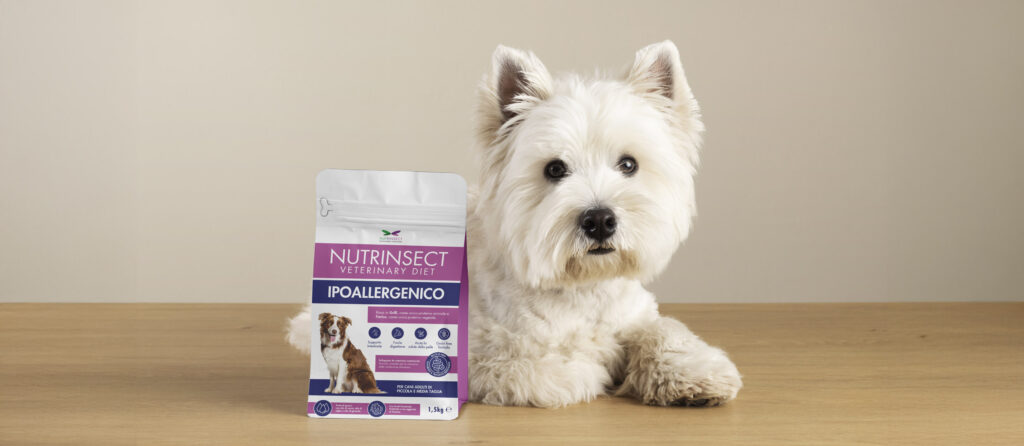
Nutrinsect Intolerance Diet it was developed specially per la riduzione delle intolleranze alimentari, con la formulazione curata da un medici veterinari, non è un alimento generico riadattato.
It's a complete dietary food for adult dogs.
Our kibbles are useful for fighting nutritional problems but also for providing a source of nutrition Truly quality for your dog:

🦗 Grillo 14% — the only animal protein, never encountered before by almost any dog
🌱 Favino 42.85% — only vegetable protein: a single legume, less variables
🚫 Grain-free
🐟 Algae oil (Omega 3) — contributes to normal skin and coat health
🌾 Prebiotici e lieviti funzionali — per l’equilibrio del microbiota intestinale
👉 Go to the Nutrinsect Intolerance Diet page
👉 Leggi l’approfondimento: perché cambiare marca spesso non basta
Nutrinsect Intolerance Diet is also a perfect diet for those who choose to feed a higher quality meal.
👉 Discover Andrea's story: Nutrinsect Intolerance Diet to improve the health and aesthetic performance of his competition German Shepherds.
Frequently Asked Questions
My dog scratches but doesn't have fleas: what could it be? Tra le cause più frequenti ce ne sono cinque: le pulci stesse anche se non si vedono, altri parassiti invisibili a occhio nudo, un’infezione della pelle, gli allergeni dell’ambiente e una reazione al cibo. Nessuna si riconosce a occhio: serve il veterinario.
If I don't see fleas, can I rule them out? No. Nella dermatite allergica da pulci il problema è la reazione alla saliva, e in un cane allergico può bastare un’esposizione molto piccola. È una delle prime cose che il veterinario controlla, non l’ultima.
I've changed three brands of kibble and he still scratches. Why? Perché potresti non aver cambiato la fonte proteica: se in tutte c’era pollo, anche sotto nomi diversi, la variabile che conta è rimasta la stessa. E soprattutto perché un cambio di marca, da solo, non è una prova alimentare.
How do I know for sure if it's food? Con una dieta a eliminazione impostata dal veterinario, seguita dalla reintroduzione dell’alimento precedente. Se il fastidio torna, la risposta è arrivata. Gli esami del sangue non sono considerati affidabili per questa diagnosi: la conferma passa da lì.
How long does a food challenge last? Le linee guida indicano 4-12 settimane. Dopo 5 settimane più dell’80% dei cani interessati migliora, ma servono 8 weeks to recognize over 90%. Evaluating after a few days is pointless.
Se si gratta tutto l’anno vuol dire che è il cibo? Non necessariamente. Anche l’allergia ambientale può durare tutto l’anno. La stagionalità orienta, non decide.
Do I really have to go to the vet? Yes. Itching has many different causes, and some require specific tests. This article will help you arrive at your appointment with the right information.
Where does the information in this article come from?
Each clinical statement on this page comes from published, peer-reviewed veterinary literature, or from international guidelines that veterinarians use in their practice:
- AAHA Guidelines 2023 on the management of allergic skin diseases in dogs and cats — aaha.org
- Olivry T., Mueller R.S., Prélaud P., Duration of elimination diets, BMC Veterinary Research, 2015 — bmcvetres.biomedcentral.com
- Favrot C. et al., Canine atopic dermatitis: detailed guidelines for diagnosis and allergen identification, BMC Veterinary Research, 2015 — link.springer.com
Nutrinsect.
To nourish is to protect.